Intro To Count Metrics
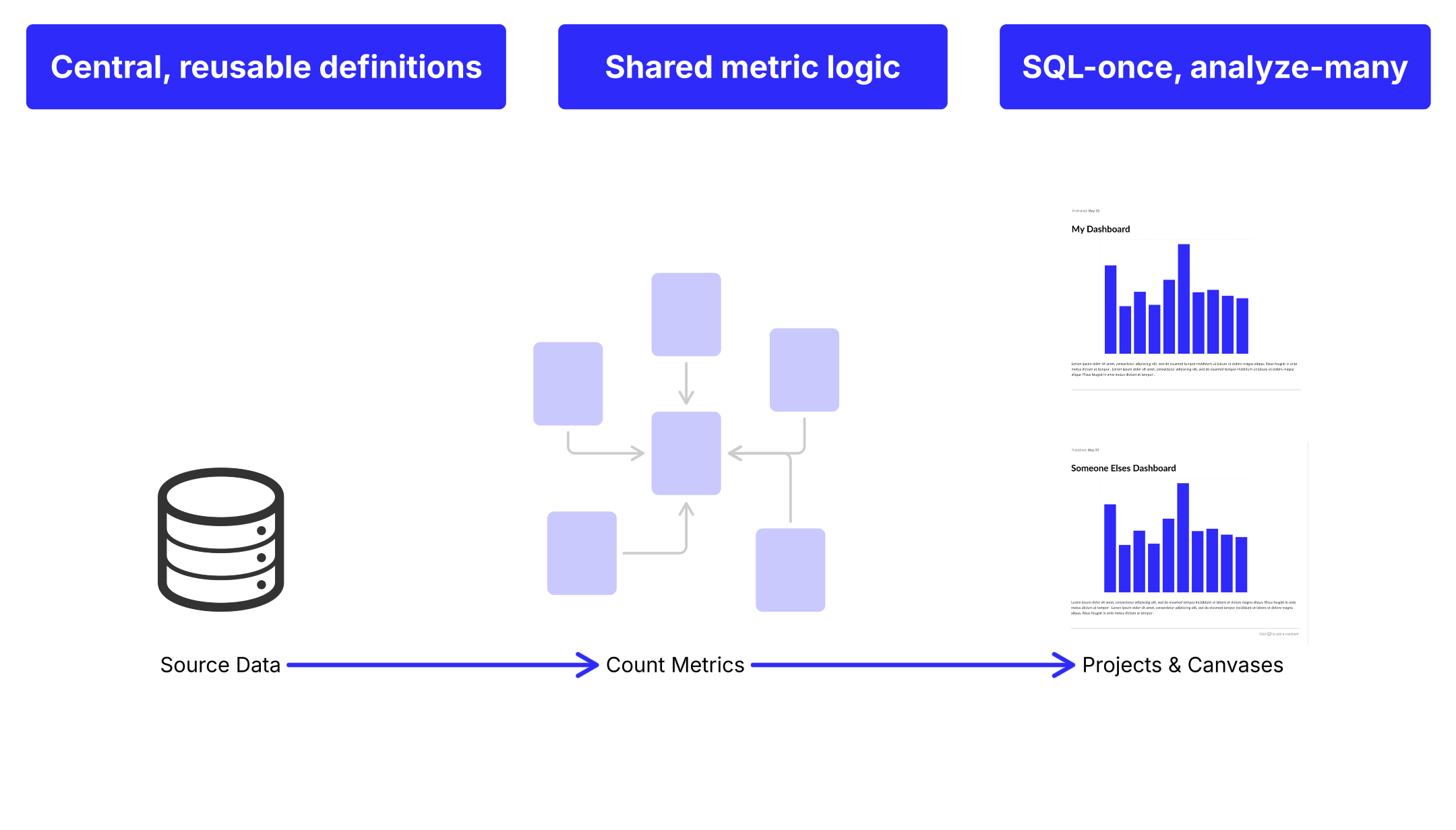
Count Metrics is Count’s semantic layer, providing a trusted source for your data logic, from business metrics to complex SQL and repetitive joins, by defining them once. Consistently and centrally.
Concepts
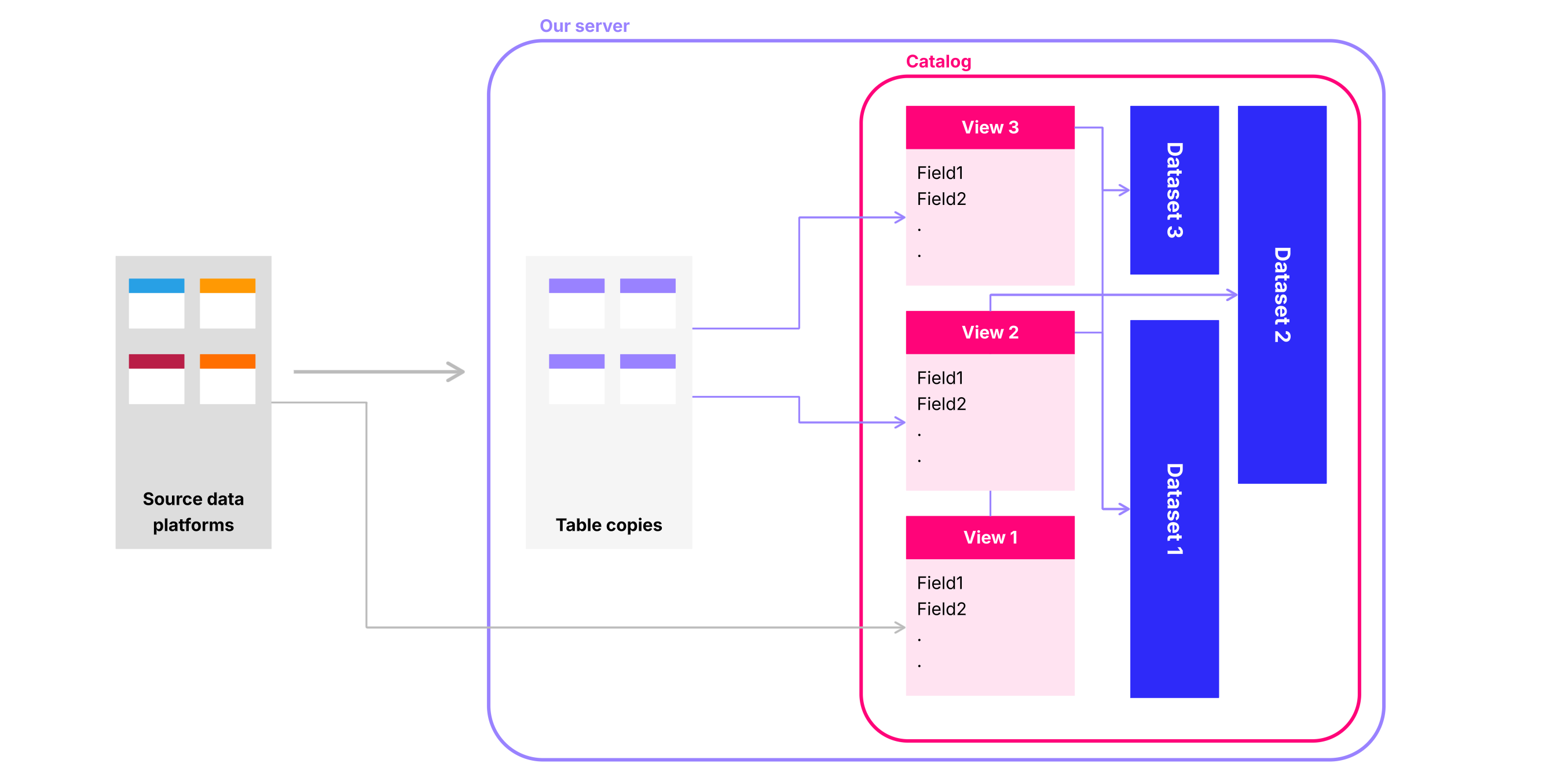
The semantic layer consists of four types of entity: catalogs, datasets, views and catalog maintainers.
Views — Selections of fields (measures and dimensions), along with assorted metadata. Views can be quickly initialised from database tables and canvas cells, and can be executed on remote databases, as well as in DuckDB and Python local to the user.
Datasets — A collection of views and the information about the relationships between them. These make up the tables that users see when constructing queries from the semantic layer.
Catalogs — the highest-level object within a semantic layer. Catalogs are self-contained entities that house various views and datasets, and can be used as project data sources (just like database connections). Each catalog is stored in a separate Git repository.
Catalog config file — The catalog config file (count_catalog.yml) allows you to apply catalog wide settings. Currently this supports caching & scheduling. Caching can be optionally configured. It makes queries faster by keeping local copies of your tables on our servers. When a view is executed, the system copies the table and runs a query for that view. Exploring the catalog then uses these copies for quicker results.
AI context via AGENTS.md — AI agents interacting with a catalog can also read an AGENTS.md file in the catalog repository. This allows you to provide additional structured context, guidance, conventions, or business definitions that may not live directly in views or datasets. Read more about about agent context best practice here.